📑 Table of Contents
1. 7 Racket Frame Failure Modes: Root Causes, Thresholds & OEM Fixes
Laboratory failure forensics across returned badminton, tennis, squash, and padel frames show that over 85% of non-clash structural failures originate from four preventable maintenance errors: restringing over split grommets at the 2/4/8/10 o'clock corners, leaving a snapped string uncut on court, 2-point stringing machine clamping distortion, or storing rackets inside >60°C (140°F) parked car trunks where structural epoxy resin softens.
Key Takeaways for High-Tension Racket Care & Fleet Longevity:
- Grommet Rotation & U-Strip Protection: Rotate single Nylon-66 grommets 90° every 2 restringings, replace split tubes every 4–5 restringings above 27–28 LBS, and install continuous 2/4/8-pin U-grommet load spreaders at the 2/4/8/10 o'clock sweet-spot corners.
- 60-Second Broken-String Rule: A single snapped string triggers a 500–700 N asymmetric bending load across the carbon hoop; cut the center main/cross immediately and snip diagonally outward in an X-pattern within 60 seconds.
- Safe Thermal & Humidity Window (10°C–35°C, 40%–65% RH): Never leave carbon or Padel rackets in parked cars (60°C–75°C softens epoxy near its Tg threshold and expands Padel EVA foam gas pockets); carry rackets in foil-lined thermo bags and acclimatize cold frames (<0°C) for 15 minutes before play.
- Factory Pre-Reinforced OEM SKUs: RacketOEM equips FC-BD-01–04 with recessed string channels and virgin Nylon-66 collars for 28–35 LBS resilience, FC-PD-01 with vacuum-degassed EVA, and CC-BD-01 / CA-BD-01 / ST-BD-01–08 for high-impact club and school fleets.
| Failure Symptom | Root Physical Cause | Critical Risk Threshold | Immediate Prevention Action | Factory OEM Spec Solution |
|---|---|---|---|---|
| Grommet channel sinking (2/4/8/10 o'clock) | Split Nylon-66 collar exposes bare carbon wall to 0.63mm–0.66mm string wire-saw shear | >3–4 restringings at 28–35 LBS without tube rotation | Rotate single grommets 90°; install 4-pin/8-pin continuous U-grommet strips | Deepened perimeter string groove + virgin Nylon-66 flared tubes (FC-BD-01–04) |
| 12 / 6 o'clock inward hoop buckle | Excessive main-string pull without 6-point suspension support or cross tension balance | >260–280 kg cumulative hoop load or loose 12/6 towers | Use calibrated 6-point constant-pull machine with +1.5 to 2.0 LBS cross differential | High-density internal core molding + multi-axis 30T/40T apex layup (FC-BD-01) |
| Asymmetric oval warp after string break | Uncut remaining strings pull one-sided 500–700 N bending torque across thin hoop walls | >3–5 minutes left uncut on frames strung >26 LBS | Cut center main & cross within 60 seconds using diagonal X-sequence | Symmetrical box-aero wall thickness controlled within ±0.08mm (FC-BD-01–04) |
| Car-trunk resin creep & Padel EVA bubble | Cabin heat approaches epoxy Tg (65°C–80°C) and expands closed-cell Padel EVA gas | >55°C–75°C (131°F–167°F) exposure for >30 minutes | Remove rackets from parked cars; store at 10°C–35°C in thermo-foil bags | High-Tg toughened epoxy matrix + vacuum-degassed High-Memory EVA (FC-PD-01) |
| T-joint micro-crack & torsional twist | Off-center smash torque combined with winter resin brittleness at shaft-throat junction | Repeated mishits >30 LBS or cold shock below 0°C | Warm up frame 15–20 min indoors in winter and drop tension by 1.5–2.0 LBS | Built-in 3D carbon T-throat + 40T anti-torsion shaft architecture (FC-BD-01/04) |
| Handle creaking or cone loosening | Sweat moisture swelling followed by over-dry wood shrinkage (<25% RH) or glue fatigue | Trapped wet PU overgrip or raw silica gel touching wood | Air-dry wet grip 2–3 hours post-match; keep desiccant packets off bare wood | Kiln-dried 10% moisture poplar handle + dual-pin epoxy-locked ABS cone |
| Doubles clash paint chip vs. structural crack | Brittle polyurethane clearcoat flake vs. through-thickness carbon fiber ply fracture | High-speed frame-on-frame collision at 10–2 o'clock | Inspect under 10x LED magnifier before restringing; retire frames with fiber crease | Flexible PU primer coat (FC-BD-01–04) or ductile alloy rental frames (CA-BD-01, ST-BD-01–08) |
2. Grommet 90° Rotation, U-Grommet Strips & 60-Second String-Cutting SOP
Even the highest-modulus 30T/40T carbon hoop will suffer localized wall collapse if thin multifilament strings saw directly against unprotected graphite edges after 3 to 4 high-tension restringings (>28 LBS). Implementing a strict grommet maintenance cycle and an on-court emergency cutting routine eliminates premature hoop sinking.
- 90° Single-Grommet Rotation Cycle: Between every 2 restringings, stringers should use a grommet extractor awl to rotate single-pass Nylon-66 tubes by 90°, shifting the string-turn contact point onto fresh 0.45mm polymer wall thickness, followed by full grommet replacement every 4–5 restringings above 27–28 LBS.
- Continuous 2-Pin / 4-Pin / 8-Pin U-Grommet Load Spreaders: At the 2, 4, 8, and 10 o'clock sweet-spot corners and muscle-power arches where angled string exits generate peak shear, bridging individual holes with continuous U-grommet strips distributes tension across 18mm–42mm of carbon rib—reducing frame channel sinking by more than 70%.
- Shared-Hole Cold Flaring (4.0mm Collars): Double-pass shared grommets and knot tie-off holes endure twice the friction and heat during electronic pulls; cold-flaring outer tube collars at 110°–120° anchors the sleeve firmly against the perimeter groove.
4-Step On-Court Emergency Diagonal String-Cutting SOP (Within 60 Seconds)
- Step 1 (0–15 Seconds) — Stop Play Immediately: The instant a main or cross string snaps, stop swinging and never try to bend a visibly ovalized hoop back into shape by hand; keep a dedicated 115mm blunt-tip diagonal string cutter in your bag.
- Step 2 (15–30 Seconds) — Snip the Center Main & Cross Intersection: Cut directly at the geometric center of the string bed (middle main + middle cross) first so peak vertical and horizontal compression drops symmetrically by ~45%.
- Step 3 (30–45 Seconds) — Cut Outward Diagonally in an X-Pattern: Clip alternating string pairs diagonally toward the 2/8 o'clock and 10/4 o'clock corners, bleeding off the remaining 500–700 N load evenly without shocking the 12 o'clock apex or T-joint.
- Step 4 (45–60 Seconds) — Slide Out Remnants & Flag Split Grommets: Pull cut string pieces gently from the outer perimeter rather than yanking knots backward through tight shared grommets, and mark notched tubes for your stringer.
3. Car-Trunk Heat (>60°C), Sub-Zero Cold & Humidity Storage Limits
Carbon filaments remain stable well above 300°C, yet the structural epoxy matrix binding those plies softens near its glass-transition temperature (Tg 65°C–80°C), while closed-cell Padel EVA foam cores expand internally whenever storage temperatures exceed 55°C–60°C (131°F–140°F).
- Parked Car-Trunk Heat Danger (60°C–75°C / 140°F–167°F): A closed vehicle trunk parked in summer sunlight reaches 60°C–75°C in under 45 minutes. At this temperature, a carbon frame carrying 28–35 LBS of string tension undergoes permanent viscoelastic epoxy creep into a warped oval, while Padel rackets (such as 3K carbon / EVA models) suffer internal gas expansion, face blistering, and core delamination.
- Sub-Zero Winter Brittleness (<0°C / 32°F Pre-Match Warm-Up): Freezing winter transit stiffens polymer resins, Nylon-66 grommets, and thin strings, raising brittle impact fracture risk on off-center hits. Always acclimatize rackets inside the sports hall at 15°C–22°C for 15–20 minutes before heavy smashes, and reduce winter string tension by 1.5–2.0 LBS.
- Ideal Storage Range (10°C–35°C, 40%–65% RH) & Thermo-Insulated Foil Bags: Store rackets vertically on wall racks or flat without heavy gym bags stacked on top, utilizing aluminum-foil thermo-lined compartments that attenuate radiant temperature spikes by 12°C–18°C during transit.
- Humidity & Silica Gel Placement (Wooden Handles vs. Damp PU Grips): Unzip racket bags for 2–3 hours after play so sweat-damp polyurethane overgrips evaporate cleanly instead of corroding steel handle staples; never place raw silica gel desiccant packets directly against bare wooden handles, as extreme drying (<25% RH) shrinks wood cores and loosens the shaft cone.
4. Club & OEM Warranty Inspection: Defect vs. Clash & Fleet Durability
Clubs, tournament stringers, and private-label distributors can resolve disputed returns accurately using a 2-minute 3-zone forensic warranty inspection, while specifying factory-installed anti-sinking reinforcements across RacketOEM production lines.
- Molding Void Defect vs. Court Clash Fracture: A genuine manufacturing resin dry-spot fractures radially outward under clean tensile stress with intact surrounding paint, whereas a doubles racket clash or floor scrape leaves a localized inward V-dent, crushed outer carbon fibers, or matte scuff transfer along the 10–2 o'clock bezel.
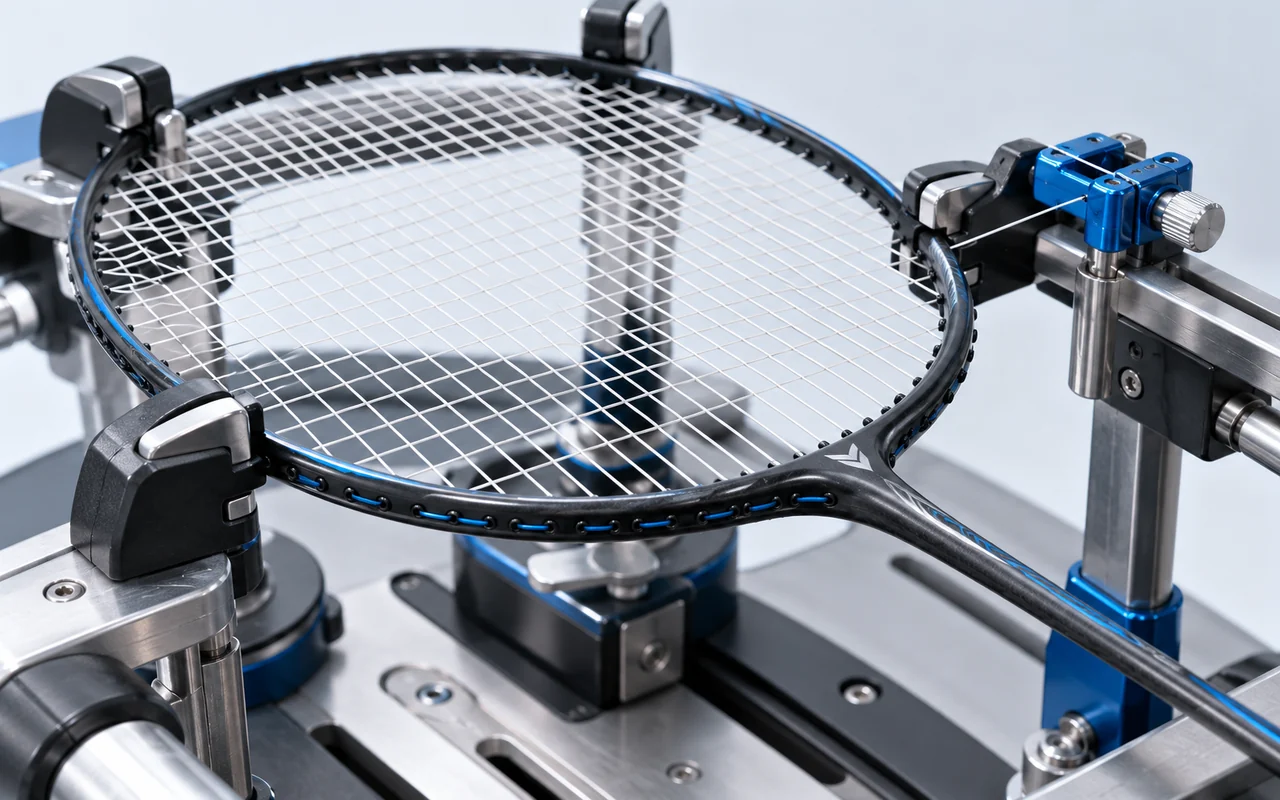
- Stringing Machine Clamping & Mounting Signatures: Inward compression creases at 12/6 o'clock or symmetric clamp crush marks at 2/4/8/10 o'clock point to uncalibrated 2-point mounts or over-torqued fixed clamps rather than composite fatigue.
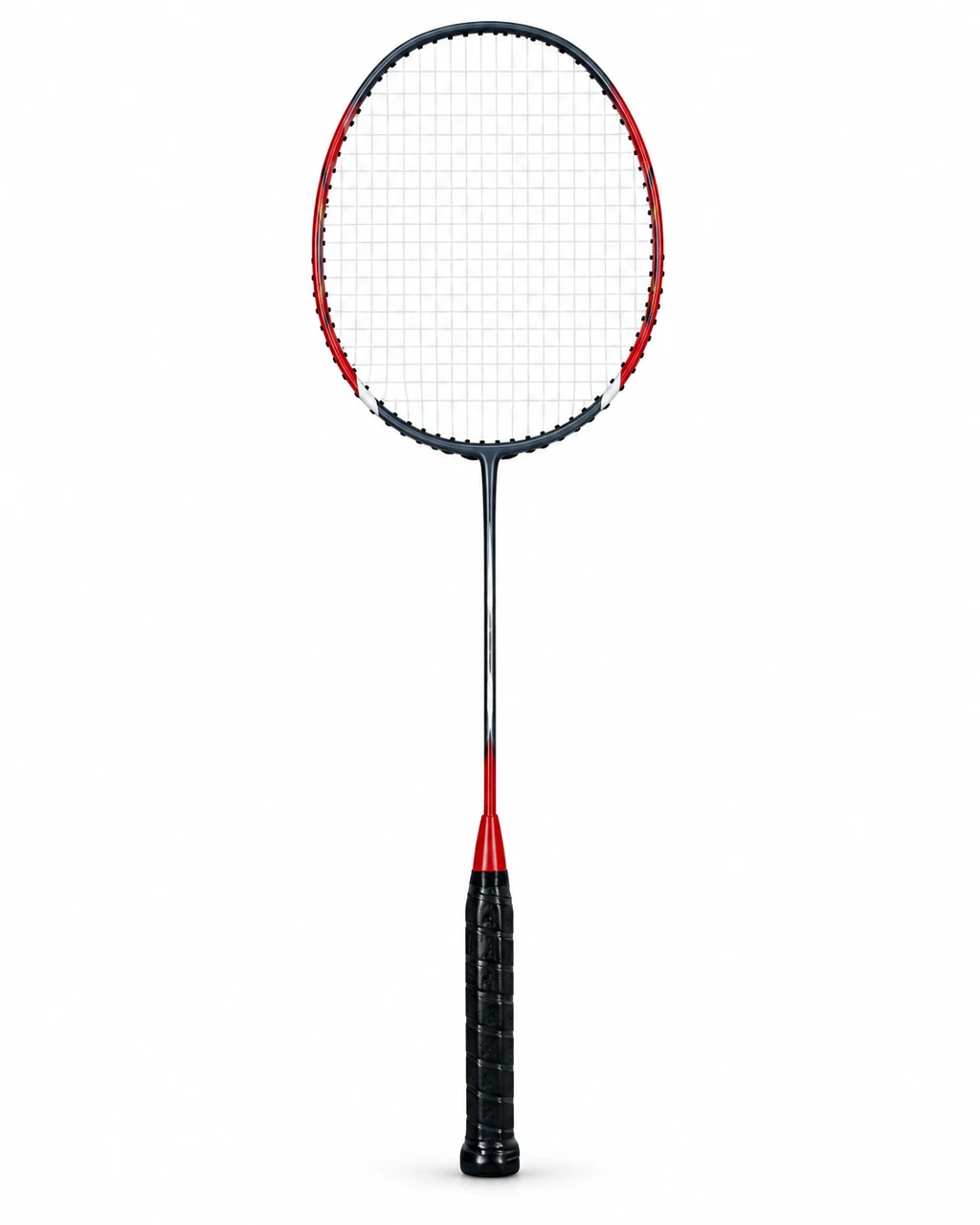
- High-Tension Carbon & Padel OEM Engineering (FC-BD-01–04 & FC-PD-01): RacketOEM pre-equips FC-BD-01 (30T frame / 40T shaft) and FC-BD-02–04 with deepened perimeter string grooves, virgin high-durometer Nylon-66 grommets, and optional pre-fitted 4-pin/8-pin continuous U-grommet strips for 28–35 LBS durability, while FC-PD-01 (3K carbon Padel) utilizes high-Tg epoxy curing and vacuum-degassed EVA cores.
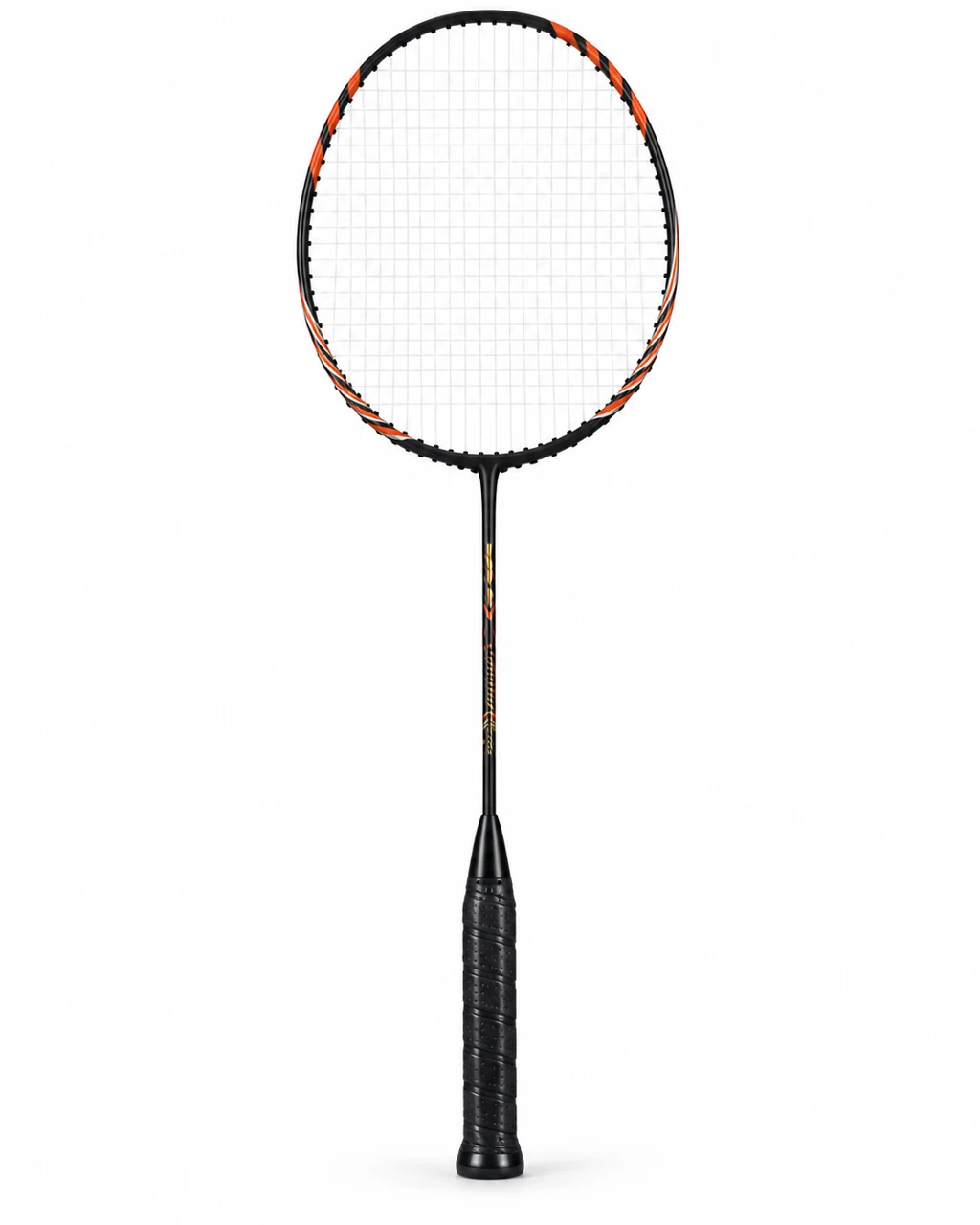
- High-Abuse Club & School Fleet Selection (CC-BD-01, CA-BD-01 & ST-BD-01–08): For rental courts, school PE programs, and recreational sets where clash impact outweighs ultra-high string poundage, pairing CC-BD-01 (24T carbon composite), CA-BD-01 (carbon shaft + aluminum alloy hoop), and ST-BD-01–08 (tempered steel series) with thickened grommet collars cuts annual fleet breakage drastically.
Multi-Sport Racket OEM Manufacturing Matrix (39 Active Platforms)
Manufactured at our 12,000 m² facility in Fuyang District, Hangzhou (Hangzhou Bailian Trading Co., Ltd., ISO 9001:2015, Est. 2011; 1,200,000+ rackets annual capacity, 100,000+ monthly), our 39 OEM racket platforms span four court sports—Badminton (15 models), Padel (14 models), Tennis (4 models), and Squash (6 models)—engineered across Full Carbon, Carbon Composite, Aluminum Alloy, and Steel constructions.
| Sport Category | Active Models | Material & Layup Systems | Core Physical & Structural Parameters | Representative Model Codes |
|---|---|---|---|---|
| Badminton racket → | 15 | 24T/30T/40T Toray High-Modulus Carbon Prepreg (FC), Carbon Composite (CC), Aluminum Alloy (AL), Steel (ST) | Weight 3U/4U/5U (75g–98g); Balance Point 285–305mm; Shaft Ø 6.8–7.0mm; String Tension 20–35 LBS | FC-BD-01, FC-BD-02, FC-BD-03, CC-BD-01, AL-BD-01, ST-BD-01 |
| Padel racket → | 14 | 3K / 12K / 18K Woven Full Carbon (FC) & Carbon/Fiberglass Composite (CC) + EVA Memory Core | Profile 38mm standard; Weight 360±10g; Length 455mm; Balance Point 260–270mm; EVA Hardness 13°–17° | FC-PD-01, CC-PD-01, CC-PD-02, CC-PD-04, CC-PD-08, CC-PD-13 |
| Tennis racket → | 4 | T700 Full Carbon Monocoque (FC), Carbon Composite (CC), Aluminum Alloy (AL), Steel (ST) | Head Size 96–105 sq.in.; String Pattern 16×19; String Tension 52–62 LBS; Length 685mm (27 in) | UN-TN-01, UN-TN-02, UN-TN-03, UN-TN-04 |
| Squash racket → | 6 | High-Modulus Full Carbon (FC), Carbon Composite (CC), Lightweight Aluminum (AL), Steel (ST) | Head Size 72.5–77.5 sq.in. (500 cm²); String Pattern 14×18 / 16×17 / 16×19; Length 685mm | UN-SQ-01, UN-SQ-02, UN-SQ-03, UN-SQ-04, UN-SQ-05, UN-SQ-06 |
Frequently Asked Sourcing & Engineering Questions
How often should badminton or tennis grommets be rotated or replaced?
Rotate single-pass grommets 90 degrees every 2 restringings and replace worn or split grommets every 4 to 5 restringings whenever stringing above 27 LBS (12.2 kg). For frames regularly strung at 30–35 LBS, installing continuous 4-pin or 8-pin U-grommet load spreaders at the 2, 4, 8, and 10 o'clock corners prevents thin strings from biting into the carbon wall.
Why must you cut all strings immediately after one string breaks?
You must cut all strings diagonally within 60 seconds because a single snapped string creates an asymmetric 500 to 700 N tension imbalance that warps thin-walled carbon hoops within minutes. Start by snipping the center main and cross intersection, then cut outward in an X-pattern to release residual stress evenly.
Does leaving a carbon or Padel racket in a hot car damage it?
Yes—above 55°C to 65°C (131°F–149°F), structural epoxy resin softens near its glass-transition range and creeps permanently under string tension, while closed-cell Padel EVA foam cores expand and delaminate from the carbon face. Always store rackets between 10°C and 35°C (40%–65% RH) inside thermo-insulated foil bags.
Can RacketOEM supply spare grommet strip kits and U-nails with bulk OEM orders?
Yes, RacketOEM supplies custom-molded virgin Nylon-66 spare grommet sets and continuous 2-pin, 4-pin, and 8-pin U-grommet load-spreader strips packed per master carton. These service kits match the exact hole pitch of FC-BD-01–04 and CC-BD-01 so B2B brands, clubs, and pro shops can support multi-year customer restringing.