📑 Table of Contents
1. 5 Racket Material Families: Weight, String Tension & SKU Matrix
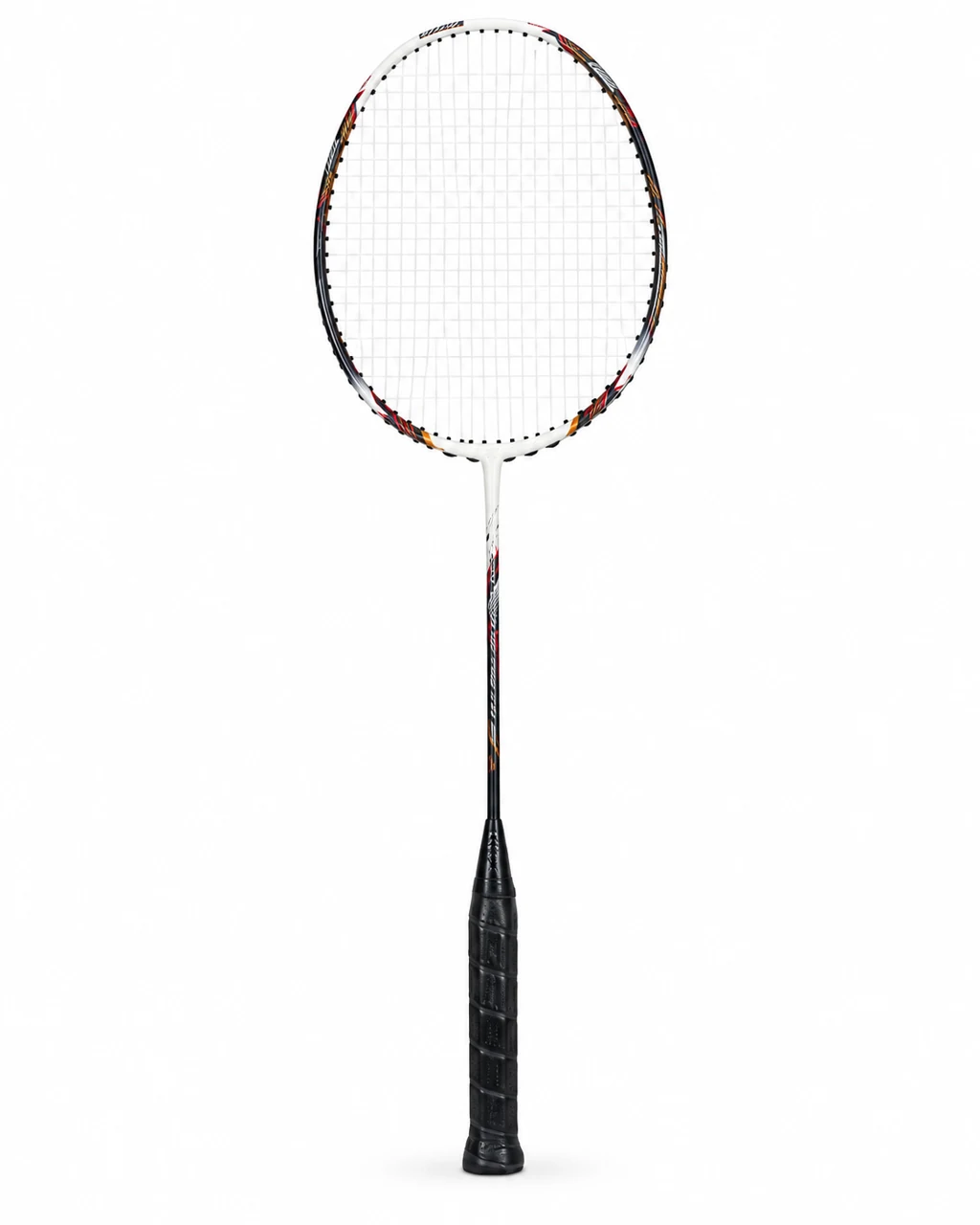
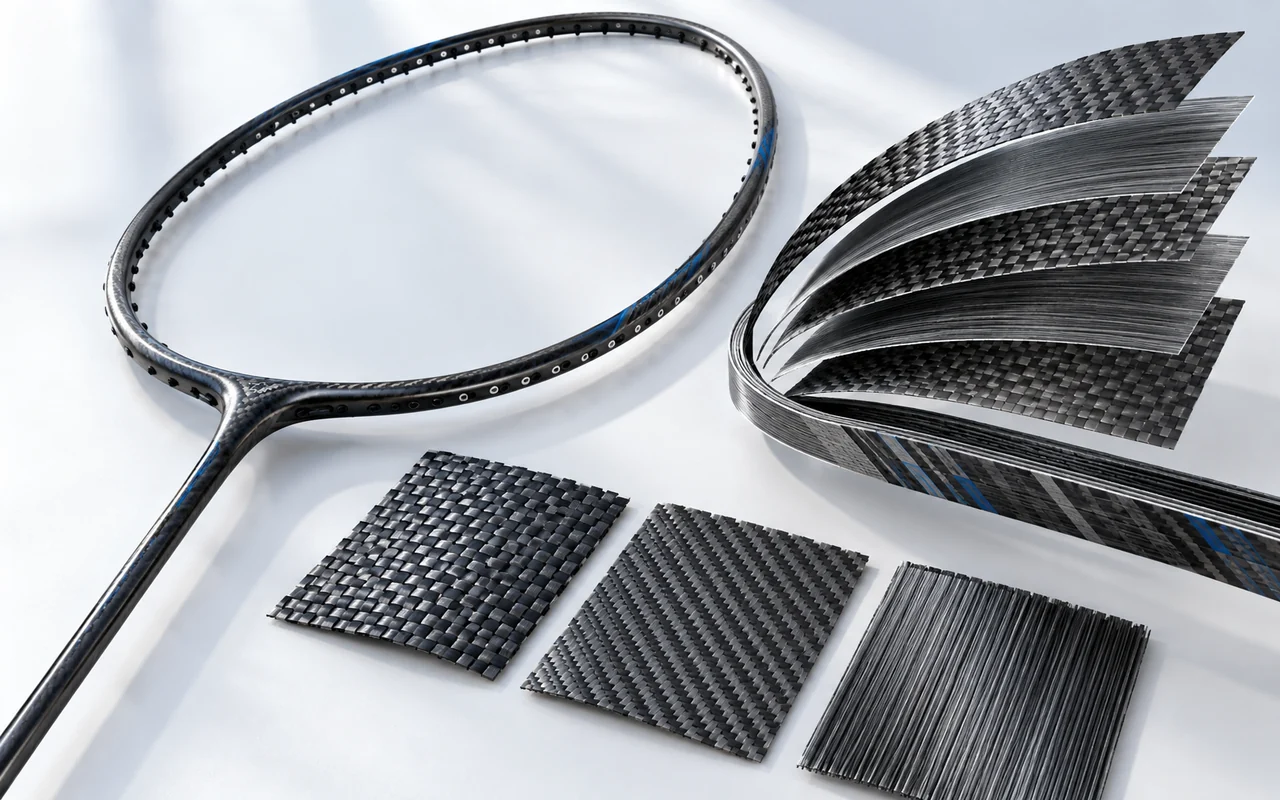
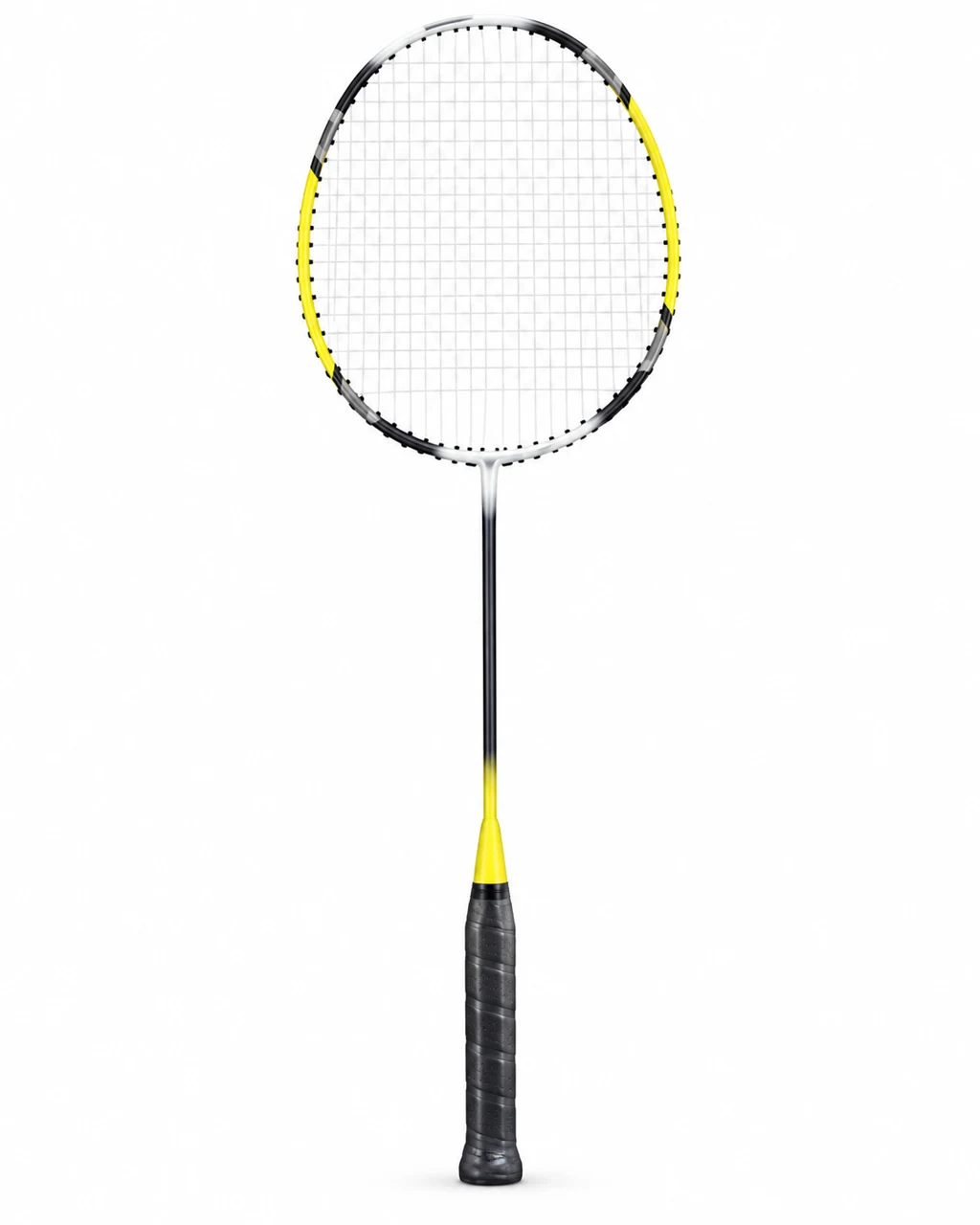
At RacketOEM’s Hangzhou Fuyang manufacturing facility, racket frames are engineered across five distinct structural material families: Full Carbon Fiber (24T–40T Toray prepreg, 75–85g, 28–35 LBS), Carbon Composite (graphite + fiberglass hybrid matrix, 84–89g, 22–26 LBS), Carbon-Aluminum Two-Piece (carbon shaft + aluminum alloy head, 90–95g, 20–24 LBS), Full Aluminum Alloy (6061/7075 extruded T-joint, 95–102g, 18–22 LBS), and Tempered Steel Alloy (105–118g, 16–20 LBS). Choosing the right material tier prevents frame collapse under high string tension and aligns unit FOB cost with your target distribution channel.
Key Takeaways for B2B Racket Buyers & Product Managers:
- Weight & Swing Fatigue (75g to 118g): Full Carbon frames weigh 75–85g (5U–3U) for effortless wrist snap; Carbon Composite sits at 84–89g; Carbon-Aluminum bridges 90–95g; Full Aluminum reaches 95–102g; and Tempered Steel spans 105–118g for ultra-heavy institutional abuse.
- Max Safe String Tension (16 to 35 LBS): One-piece Toray 24T–40T carbon frames withstand 28–35 LBS; Carbon Composite handles 22–26 LBS; Carbon-Aluminum supports 20–24 LBS; while extruded Aluminum (18–22 LBS) and Steel (16–20 LBS) deform if over-tensioned.
- Institutional Collision Durability: While high-modulus graphite excels in elastic repulsion, metallic frames (Aluminum 6061/7075 and Tempered Steel) resist catastrophic brittle fracture when struck against gym floors or steel posts in school PE classes.
- B2B Wholesale Cost & Margin Tiers: Supermarket twin-packs and school tenders maximize margin using Steel (ST-BD-01–08) and Carbon-Aluminum (CA-BD-01), whereas pro shops and tournament brands command 3x–5x retail markups with Full Carbon (FC-BD-01–04).
| Material Family | Unstrung Weight | Max String Tension | Impact & Floor-Hit Durability | Target Channel & Representative SKUs |
|---|---|---|---|---|
| Full Carbon Fiber (24T / 30T / 40T) | 75–85g (5U / 4U / 3U) | 28–35 LBS | High tensile stiffness; sensitive to sharp floor/metal impacts | Pro clubs & tournament retail (FC-BD-01 to FC-BD-04) |
| Carbon Composite (Graphite + Glass) | 84–89g (4U / 3U) | 22–26 LBS | Flexible impact absorption; resists hairline cracking | Entry club & intermediate sports retail (CC-BD-01, UN-TN-01–04) |
| Carbon-Aluminum (Carbon Shaft + Al Head) | 90–95g (2U) | 20–24 LBS | Aluminum rim bends slightly instead of snapping on court contact | Advanced school PE & gift box sets (CA-BD-01, UN-SQ-01–03) |
| Full Aluminum Alloy (6061 / 7075) | 95–102g | 18–22 LBS | High dent resistance; zero delamination in humid storage | School recreation & mass-market twin packs (AL-BD-01, UN-SQ-04–06) |
| Tempered Steel Alloy (High-Carbon Steel) | 105–118g | 16–20 LBS | Maximum abuse tolerance against concrete floors & rental misuse | Public schools, camps & budget tenders (ST-BD-01 to ST-BD-08) |
Engineering Note on One-Piece Molded Graphite vs. Metallic T-Joints:
Full Carbon and Carbon Composite rackets use an internal bladder-molded carbon T-joint (seamless one-piece construction) that eliminates rotational play. By contrast, Carbon-Aluminum, Full Aluminum, and Steel rackets use a high-pressure crimped internal or external metallic T-ferrule, which trades torsional crispness for rugged mechanical impact survival.
2. Carbon Composite vs. Full Carbon Graphite: Shaft Deflection & Torque
The #1 technical question from B2B buyers and private-label product managers is the exact mechanical difference between Carbon Composite (such as CC-BD-01) and 100% Full Carbon Graphite (FC-BD-01 to FC-BD-04). Carbon Composite co-winds unidirectional carbon prepreg with epoxy-impregnated E-glass fiberglass filaments, lowering material cost by 30%–40% while softening shaft flex for recreational swing speeds.
| Construction Tier | Shaft Deflection (at 3kg Load) | Torsion Angle (at 0.5 N·m) | Vibration Damping & Repulsion | B2B Retail Positioning |
|---|---|---|---|---|
| Full Carbon 30T / 40T (FC-BD-01–04) | 7.5 – 9.2 mm (Stiff to Medium) | ≤ 3.2° (Tour-grade anti-twist) | Instant kinetic snapback, crisp acoustic feedback, zero energy lag | Flagship pro-shop & tournament series ($80–$180 retail) |
| Carbon Composite (CC-BD-01 / UN-TN-01–04) | 10.5 – 12.5 mm (Medium-Soft) | 4.5° – 5.8° | Higher fiberglass damping, forgiving whip effect for slower swings | Mid-tier sporting goods chains & starter kits ($30–$65 retail) |
| Carbon-Aluminum (CA-BD-01 / UN-SQ-01–03) | 11.0 – 13.0 mm (Carbon Shaft) | 6.5° – 8.0° (Joint flex) | Carbon shaft reduces arm shock while alloy head stabilizes sweet spot | Department stores, e-commerce bundles & upper PE ($18–$35 retail) |
| Full Aluminum / Steel (AL-BD-01 / ST-BD-01–08) | 13.5 – 16.0 mm (Heavy flex) | 8.5° – 11.5° | Low repulsion efficiency; designed purely for structural survival | Government school tenders & promotional sets ($6–$16 retail) |
3. School PE Tenders vs. Twin-Pack Retail vs. Pro Club Lineups
Structuring a profitable multi-channel racket catalog requires matching frame metallurgy to real-world user abuse and price elasticity. Below is how global importers allocate RacketOEM’s SKU portfolio across three primary B2B channels:
- Public School PE Tenders & Institutional Rental Fleets (ST-BD-01 to ST-BD-08, AL-BD-01): Students frequently clash frames or scrape concrete gym floors. Specifying Tempered Steel (ST-BD-01–08, 105–118g) or Full Aluminum (AL-BD-01, UN-SQ-04–06) with 0.75mm heavy-duty nylon stringing reduces annual replacement rates by over 70%.
- Supermarket Chains, E-Commerce Twin-Packs & Recreational Sets (CA-BD-01, CC-BD-01): Combining a graphite shaft with an aluminum head (CA-BD-01, UN-SQ-01–03) or upgrading to all-around Carbon Composite (CC-BD-01, UN-TN-01–04) gives consumers the look and lightweight feel of a seamless carbon frame at an impulse-buy retail price point.
- Badminton Academies, Club Pro-Shops & Sponsored Athletes (FC-BD-01 to FC-BD-04): Serious club players demand 4U/5U featherweight maneuverability (75–84g) and 28–35 LBS stringing capability, which can only be achieved with 100% Toray 24T/30T/40T hot-press bladder molding.
4. Multi-Material OEM Production & T-Joint Quality Control SOP
Whether an order specifies 500 pieces of 40T Full Carbon tournament frames or a 20-foot container of institutional Aluminum/Steel sets, RacketOEM enforces a standardized 4-stage manufacturing and AQL inspection protocol:
- Step 1 — Prepreg Carbon Tube Rolling & 6061/7075 Extrusion: Composite shafts and frames are rolled on precision steel mandrels and cured at 150°C, while metallic hoops are cold-drawn, heat-aged, and CNC-punched for grommet holes.
- Step 2 — T-Joint Crimping & ≥180 kgf Pull-Out Tensile Testing: For two-piece metallic/hybrid models (CA-BD-01, AL-BD-01, ST-BD-01–08), the T-joint is hydraulically crimped and epoxy-locked to pass a mandatory ≥180 kgf axial pull-out destructive test.
- Step 3 — Electrostatic Baking Paint, Water Decals & Grommet Assembly: Frames undergo 3-coat electrostatic primer/color baking, precision water-transfer branding, and virgin nylon grommet insertion to prevent string shear.
- Step 4 — Automated Pre-Stringing & ISO 2859-1 AQL 1.5/2.5 Audit: Every batch is checked for head warpage (<0.8mm), weight/balance tolerance, grip alignment, and 24-hour tension retention before export carton packing.
Multi-Sport Racket OEM Manufacturing Matrix (39 Active Platforms)
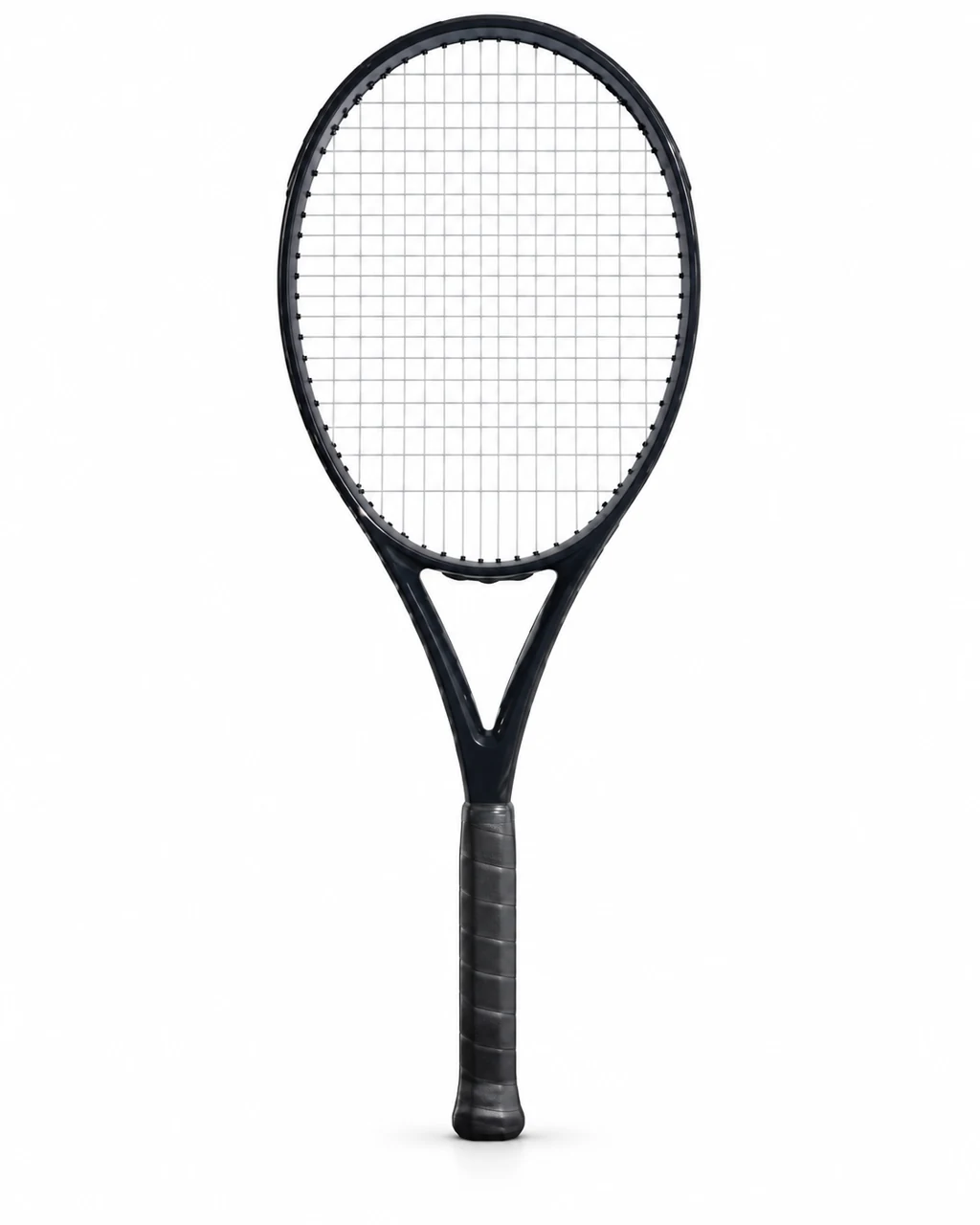
Manufactured at our 12,000 m² Hangzhou Fuyang facility (Hangzhou Bailian Trading Co., Ltd.), our 39 OEM racket platforms span four court sports—Badminton (15 models), Padel (14 models), Tennis (4 models), and Squash (6 models)—engineered across Full Carbon, Carbon Composite, Aluminum Alloy, and Steel constructions.
| Sport Category | Active Models | Material & Layup Systems | Core Physical & Structural Parameters | Representative Model Codes |
|---|---|---|---|---|
| Badminton racket | 15 | 24T/30T/40T Toray Full Carbon (FC), Carbon Composite (CC), Aluminum Alloy (AL), Steel (ST) | Weight 3U/4U/5U (75g–98g); Balance 285–305mm; Shaft Ø 6.8–7.0mm; Tension 20–35 LBS | FC-BD-01, FC-BD-02, FC-BD-03, CC-BD-01, AL-BD-01, ST-BD-01 |
| Padel racket | 14 | 3K / 12K / 18K Woven Full Carbon (FC) & Carbon/Fiberglass Composite (CC) + EVA Memory Core | Profile 38mm standard; Weight 360±10g; Length 455mm; Balance 260–270mm; EVA Hardness 13°–17° | FC-PD-01, CC-PD-01, CC-PD-02, CC-PD-04, CC-PD-08, CC-PD-13 |
| Tennis racket | 4 | T700 Full Carbon Monocoque (FC), Carbon Composite (CC), Aluminum Alloy (AL), Steel (ST) | Head Size 96–105 sq.in.; String Pattern 16×19; Tension 52–62 LBS; Length 685mm (27 in) | UN-TN-01, UN-TN-02, UN-TN-03, UN-TN-04 |
| Squash racket | 6 | High-Modulus Full Carbon (FC), Carbon Composite (CC), Lightweight Aluminum (AL), Steel (ST) | Head Size 72.5–77.5 sq.in. (500 cm²); String Pattern 14×18 / 16×17 / 16×19; Length 685mm | UN-SQ-01, UN-SQ-02, UN-SQ-03, UN-SQ-04, UN-SQ-05, UN-SQ-06 |
Frequently Asked Sourcing & Engineering Questions
How can buyers visually distinguish a Full Carbon racket from an Aluminum or Carbon-Aluminum racket?
Inspect the T-joint (where the shaft meets the head hoop). Full Carbon (FC-BD-01–04) and Carbon Composite (CC-BD-01) rackets feature a smooth, seamless one-piece molded throat with no external collar. Carbon-Aluminum (CA-BD-01), Aluminum (AL-BD-01), and Steel (ST-BD-01–08) rackets have a visible T-piece ferrule or mechanical joint seam.
Can a Carbon Composite or Aluminum badminton racket be restrung at 28 LBS?
No. Carbon Composite frames (CC-BD-01) are engineered for 22–26 LBS, and Aluminum/Carbon-Aluminum frames (AL-BD-01, CA-BD-01) are rated for 18–24 LBS. Stringing above 26 LBS requires 100% Full Carbon Fiber (FC-BD-01 to FC-BD-04) rated for 28–35 LBS.
Why do school athletic departments still buy Aluminum (AL-BD-01) and Steel (ST-BD-01–08) rackets instead of Full Carbon?
Carbon fiber has ultra-high tensile stiffness along the fiber axis but is brittle under direct lateral collision against hard gym floors or metal bleachers. Aluminum and Tempered Steel absorb blunt impacts via ductile metal resistance without snapping, making them ideal for unmanaged student group classes.
Can we combine Full Carbon, Carbon Composite, and Aluminum models in one OEM container order?
Yes. RacketOEM manufactures all five material families under one roof in Hangzhou Fuyang. B2B importers regularly mix flagship Full Carbon models (MOQ 100–200 pcs/model) with high-volume Carbon Composite and Aluminum/Steel school sets in a single consolidated shipment.