📑 Table of Contents
1. 3K vs 12K vs 18K Carbon Face Weave Comparison Chart
In padel racket engineering, the "K" rating (3K, 12K, 18K) defines the number of individual carbon micro-filaments bundled into each woven tow (3,000, 12,000, or 18,000 filaments) laminated over the impact face. Contrary to retail myths, a higher K number changes weave ribbon width, resin-to-fiber ratio, and impact dwell time rather than automatically making a racket unplayable for intermediates.
Key Takeaways for Padel Racket Buyers & OEM Brands:
- 3K vs 12K vs 18K Tow Count: 3K (3,000 filaments/tow, e.g., FC-PD-01) offers crisp elastic ball output; 12K (12,000 filaments, CC-PD-04/05) balances durability and flat rigidity; 18K (18,000 filaments, CC-PD-08/10) delivers maximum overhead smash power with tighter weave density.
- EVA Core Shore C Hardness (12°–22°): Soft 12°–15° EVA maximizes sweet-spot forgiveness and winter ball trampoline; Medium 17°–19° EVA suits all-court tournament play; Hard 20°–22° High-Memory EVA prevents energy loss for aggressive power hitters in warm climates (>25°C).
- Mold Geometry & Balance (355–375g): Teardrop molds balance at 260–268mm for versatile transition play, whereas Diamond molds shift balance to 270–275mm for maximum aerial leverage.
- Factory Tolerances & MOQ: All 14 RacketOEM padel platforms adhere to FIP 38mm profile regulations with ±3g weight sorting and private-label customization starting from 100 pcs.
| Face Material Tier | Filaments / Tow | Face Touch & Dwell Time | Ideal Player Profile | Representative OEM SKUs |
|---|---|---|---|---|
| Carbon + Fiberglass Hybrid | Bidirectional E-Glass + Carbon Tube | High trampoline rebound, soft arm-friendly dwell time | Clubs, rental fleets, intermediate control players | CC-PD-01, CC-PD-02, CC-PD-03 |
| 3K Woven Carbon | 3,000 filaments / tow | Crisp medium-stiff response, balanced ball output & pin-point accuracy | Competitive club & tournament all-rounders | FC-PD-01, CC-PD-06, CC-PD-07 |
| 12K Woven Carbon | 12,000 filaments / tow | Dense flat weave, high torsional stability on off-center volleys | Advanced tournament players & aggressive baseliners | CC-PD-04, CC-PD-05, CC-PD-09 |
| 18K Aluminized / Triaxial Carbon | 18,000 filaments / tow | Ultra-fast snapback, maximum kinetic energy on high-speed smashes | Pro power attackers & flagship retail lines | CC-PD-08, CC-PD-10, CC-PD-13 |
Engineering Note on Twin-Tube Frames:
Regardless of whether the hitting face uses 3K, 12K, or hybrid fiberglass, all tournament-grade RacketOEM padel models utilize a 100% full-carbon bi-directional tubular perimeter frame to prevent rim cracking during glass-wall contact.
2. EVA Core Hardness Chart (12° to 22° Shore C) by Court Temperature
The internal EVA (Ethylene-Vinyl Acetate) foam core accounts for over 60% of a padel racket's acoustic feel, vibration damping, and rebound velocity. Our Hangzhou Fuyang laboratory calibrates EVA blocks by Shore C durometer hardness from 12° (Ultra-Soft) to 22° (Pro High-Density) to match target court climates and player swing speeds.
| EVA Core Durometer | Density Class | Best Ambient Temperature | Mechanical Rebound Behavior | Recommended OEM Models |
|---|---|---|---|---|
| 12° – 13° Shore C | Ultra-Soft / Low Density | Cold courts (<15°C / 59°F) or indoor winter halls | Deep ball pocketing, effortless spring rebound at low swing speeds, maximum elbow protection | CC-PD-01, CC-PD-02 |
| 15° – 17° Shore C | Black EVA Medium-Soft | Temperate venues (15°C – 24°C) | Optimal equilibrium between defensive lob control and offensive bajada acceleration | FC-PD-01, CC-PD-03, CC-PD-05, CC-PD-07 |
| 19° – 20° Shore C | High-Recovery Multi-EVA | Warm clubs & indoor tournaments (20°C – 28°C) | Fast foam memory recovery, zero mushy deformation under heavy flat drives | CC-PD-04, CC-PD-06, CC-PD-09, CC-PD-11 |
| 22° Shore C | Pro Hard High-Density EVA | Hot/humid climates (>26°C) & outdoor summer courts | Firm, explosive contact; prevents excessive softening in summer heat for maximum x3 smash height | CC-PD-08, CC-PD-10, CC-PD-12, CC-PD-13 |
3. Teardrop vs Diamond vs Round Molds & 355–375g Balance Tuning
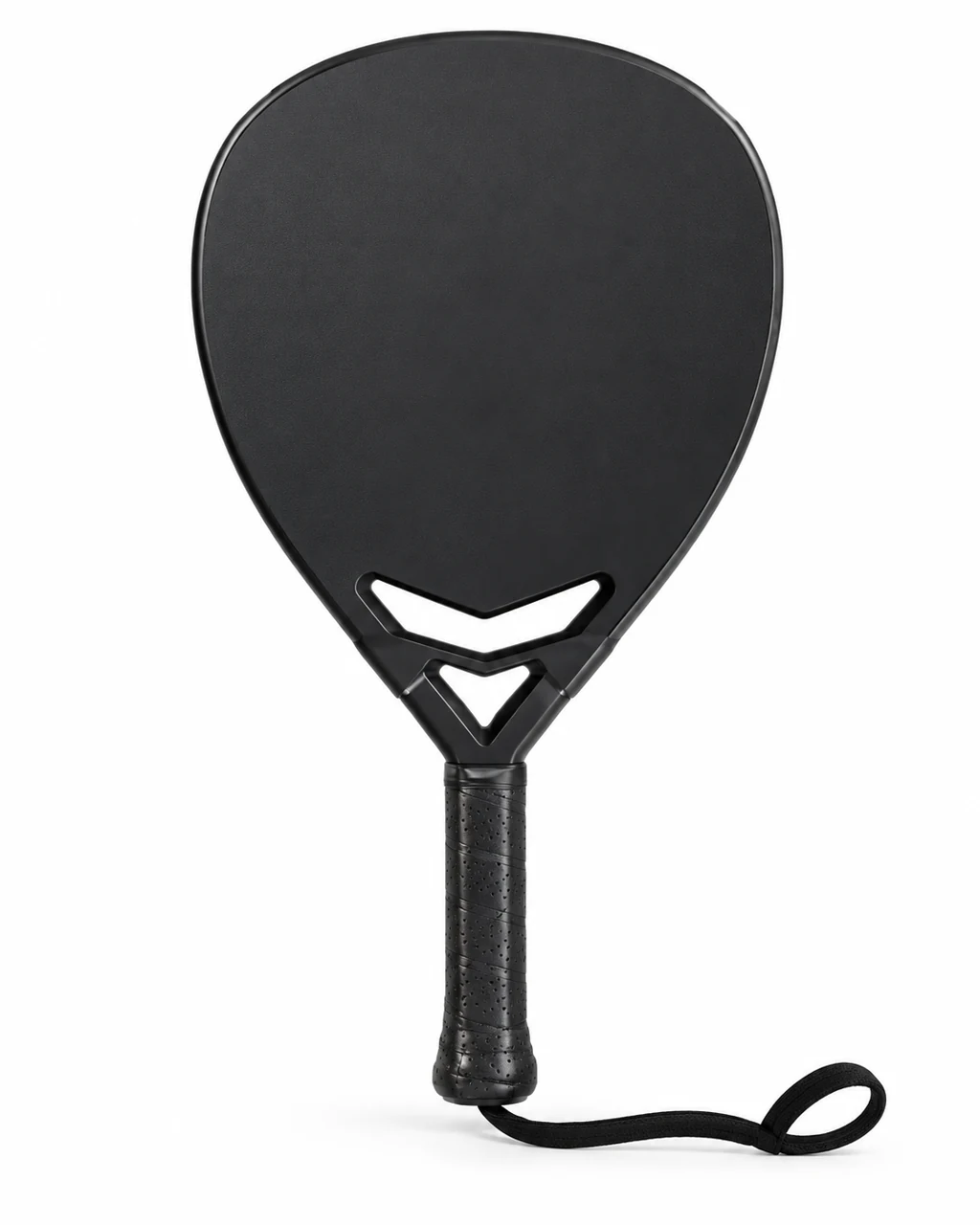
Every padel mold geometry dictates where the sweet spot sits relative to the 260mm–275mm longitudinal balance axis and 38mm FIP-mandated frame thickness. Selecting the right combination of head shape, weight bin (355–375g), and surface texture is essential when building a 3-SKU brand lineup.
- Teardrop Mold (Balance 260–266mm, SKUs FC-PD-01 & CC-PD-01–07): Positions the sweet spot slightly above center, delivering an 80/20 blend of controllable defense and overhead punch—representing 65% of global B2B wholesale volume.
- Diamond Mold (Balance 268–275mm, SKUs CC-PD-08–13): Shifts mass toward the 12 o'clock tip for maximum rotational inertia on viboras and bandeja smashes; best paired with 12K/18K carbon and anti-vibration bridge inserts.
- CNC Hole Matrix & 3D Spin Surface: Multi-diameter CNC drilling (11.5mm outer holes + 10mm center holes) preserves face tensile strength while 3D hexagonal decal relief or silica quartz sand blasting boosts ball spin RPM by up to 18%.
4. FIP-Standard 38mm Hot-Press Curing & OEM Sourcing Checklist
Manufacturing a zero-delamination padel racket requires strict thermal cycle control during resin curing and CNC post-processing. Below is the 4-stage production and quality assurance SOP executed across our 14 active padel platforms:
- Stage 1 — Twin-Tube Carbon Layup & EVA Core Die-Cutting: Prepreg carbon strips are wrapped around dual mandrel bladders while CNC-cut EVA cores (12°–22°) are bonded with heat-activated epoxy film.
- Stage 2 — Heated Steel Mold Compression (155°C, 12 Bar): The composite sandwich cures inside precision-milled steel cavities under controlled pneumatic bladder pressure to eliminate internal micro-voids.
- Stage 3 — 5-Axis CNC Hole Drilling & 3D Texture Baking: Automated CNC spindles drill chamfered aerodynamic hole patterns without fraying carbon fibers, followed by UV-cured water decals and 3D spin topcoats.
- Stage 4 — Electronic Weight Binning (±3g) & Impact Fatigue QC: Each finished racket is weighed, balance-checked, fitted with a braided safety wrist tether, and sampled under ISO 2859-1 AQL 1.5 pneumatic cannon impact tests.
Multi-Sport Racket OEM Manufacturing Matrix (39 Active Platforms)
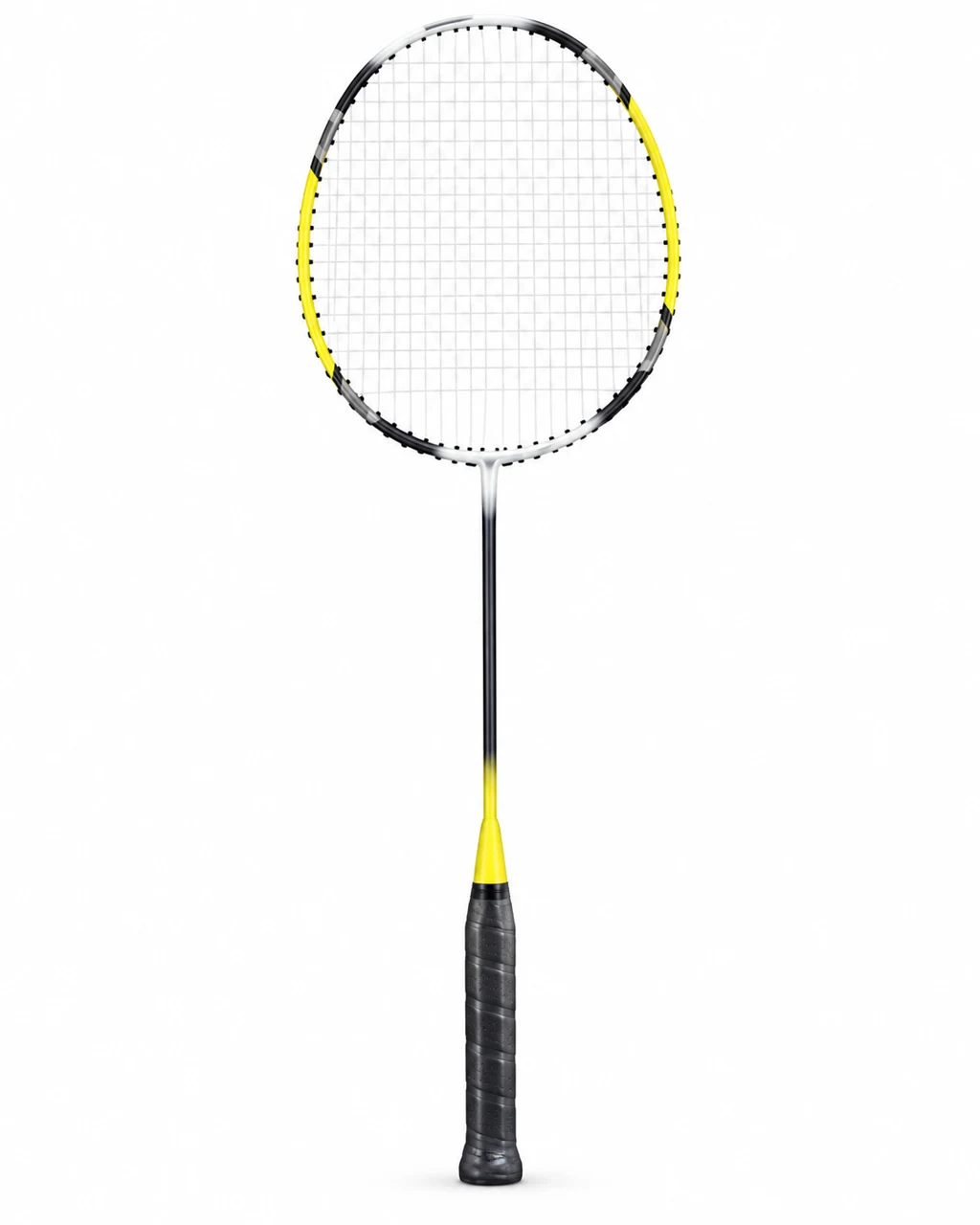
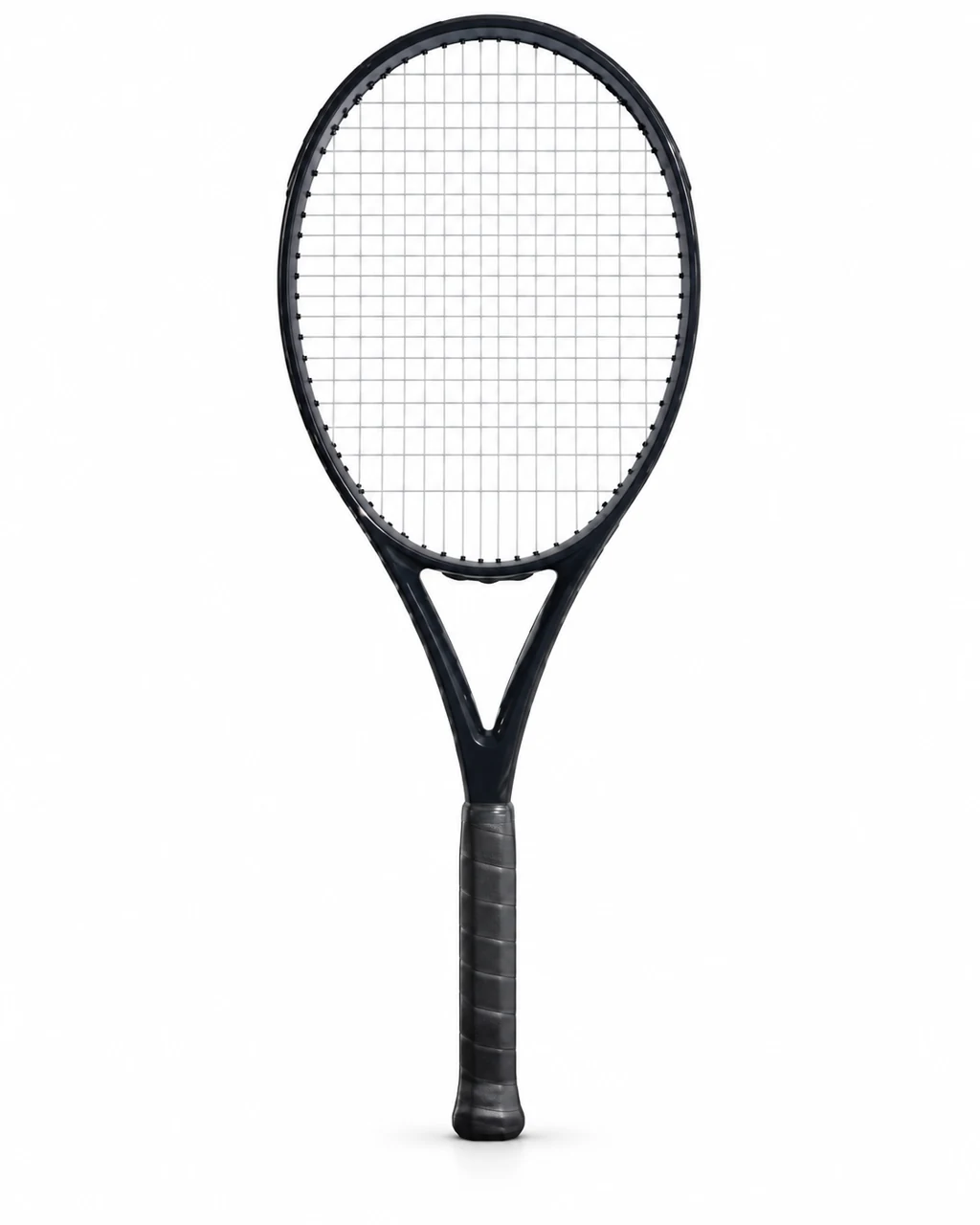
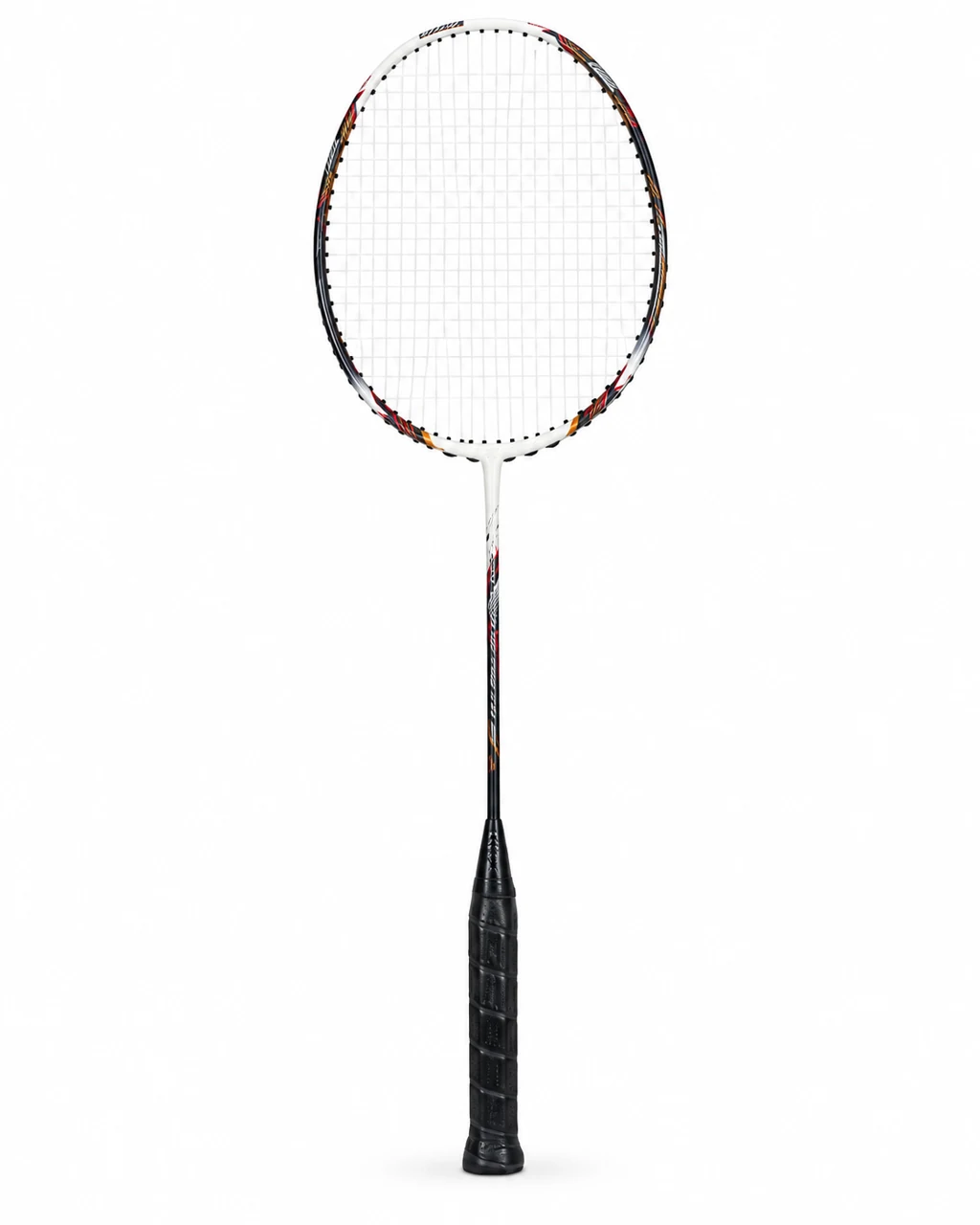
Manufactured at our 12,000 m² Hangzhou Fuyang facility (Hangzhou Bailian Trading Co., Ltd.), our 39 OEM racket platforms span four court sports—Badminton (15 models), Padel (14 models), Tennis (4 models), and Squash (6 models)—engineered across Full Carbon, Carbon Composite, Aluminum Alloy, and Steel constructions.
| Sport Category | Active Models | Material & Layup Systems | Core Physical & Structural Parameters | Representative Model Codes |
|---|---|---|---|---|
| Badminton racket | 15 | 24T/30T/40T Toray Full Carbon (FC), Carbon Composite (CC), Aluminum Alloy (AL), Steel (ST) | Weight 3U/4U/5U (75g–98g); Balance 285–305mm; Shaft Ø 6.8–7.0mm; Tension 20–35 LBS | FC-BD-01, FC-BD-02, FC-BD-03, CC-BD-01, AL-BD-01, ST-BD-01 |
| Padel racket | 14 | 3K / 12K / 18K Woven Full Carbon (FC) & Carbon/Fiberglass Composite (CC) + EVA Memory Core | Profile 38mm standard; Weight 360±10g; Length 455mm; Balance 260–270mm; EVA Hardness 13°–17° | FC-PD-01, CC-PD-01, CC-PD-02, CC-PD-04, CC-PD-08, CC-PD-13 |
| Tennis racket | 4 | T700 Full Carbon Monocoque (FC), Carbon Composite (CC), Aluminum Alloy (AL), Steel (ST) | Head Size 96–105 sq.in.; String Pattern 16×19; Tension 52–62 LBS; Length 685mm (27 in) | UN-TN-01, UN-TN-02, UN-TN-03, UN-TN-04 |
| Squash racket | 6 | High-Modulus Full Carbon (FC), Carbon Composite (CC), Lightweight Aluminum (AL), Steel (ST) | Head Size 72.5–77.5 sq.in. (500 cm²); String Pattern 14×18 / 16×17 / 16×19; Length 685mm | UN-SQ-01, UN-SQ-02, UN-SQ-03, UN-SQ-04, UN-SQ-05, UN-SQ-06 |
Frequently Asked Sourcing & Engineering Questions
Which carbon weave is best for a flagship private-label padel racket: 3K, 12K, or 18K?
For an all-around flagship targeting broad club and tournament players, 3K (such as FC-PD-01) or 12K (such as CC-PD-04) paired with a 17° Black EVA core provides the widest sweet spot and best durability. Reserve 18K + 20°/22° EVA (CC-PD-08/13) for your pro-attack model.
Why does court temperature affect padel EVA core hardness selection?
EVA foam is a thermo-sensitive polymer that softens by roughly 2°–3° Shore C when ambient temperatures exceed 28°C and stiffens below 12°C. Brands selling in Northern Europe prefer 13°–17° EVA, whereas Spanish, Middle Eastern, and Latin American summer markets favor 19°–22° EVA.
What is the minimum order quantity (MOQ) for custom branded padel rackets?
Our private-label MOQ on verified open molds (Teardrop or Diamond across FC-PD-01 and CC-PD-01 to CC-PD-13) starts at 100 pieces per model, divisible into 2 cosmetic colorways of 50 pieces each.
Do your padel rackets comply with International Padel Federation (FIP) dimensions?
Yes. All 14 RacketOEM padel molds strictly conform to FIP tournament standards: maximum length 455mm, width 260mm, flat hitting thickness 38mm (±0.4mm), and mandatory replaceable wrist safety cord.